Knee problem and stiff joints are something that you always hear the old people complain about. However, many children too have knee problems. When a child complains about knee problems, parents often assume that they must have hurt their knees while playing and the pain will go away on its own. However, pain in the knee can be a symptom of an underlying problem and it is, therefore, important to see an orthopaedic doctor. There are several reasons why a child may experience pain in the knee. The knee pain can be something as harmless as a natural course of developing bodies and as serious as juvenile arthritis.
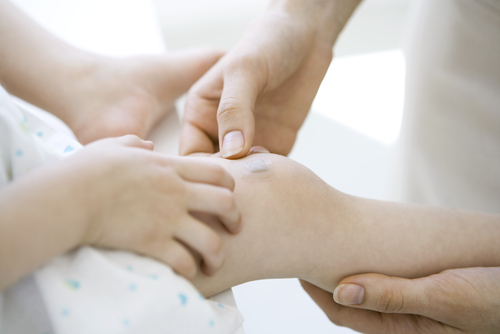
Signs that you should not ignore when your child complains of knee pain
Children often experience knee pain due to growing pains; this usually happens at a time when the child’s body is witnessing growing spurt. However, if a child is experiencing growing pains, then the doctor may not find anything off-the-mark during the physical assessment. Blood test and X-rays may not be required. However, if it’s not growing pains, there are chances there could be some serious knee condition. Here are a few symptoms that you should watch out for:
● If your child is experiencing knee pain throughout the day.
● When knee pain is accompanied by fever.
● Swelling and pain the shin bones.
● If the tendon connecting the kneecap and shinbone is tender.
● Have a fever along with pain and swelling in the knees.
● If the child is limping or favouring one leg over the other.
● The child looks tired and weak.
● Rashes around the knee.
Causes of knee pain in children
While jumping and other physical activities can put the strain on the knees and can lead to knee pain. However, there are some serious conditions that need medical attention.
Here are some causes that may trigger knee pain:
● Juvenile idiopathic arthritis: This is one of the most common types of arthritis in children under the age of 16. The condition causes constant pain, swelling and stiffness in the joints. Some children may have the symptoms for a few months while others may experience for long. A combination of medicines, physical and occupational therapy and surgery can help a child keep the joints flexible.
● Osgood-Schlatter disease: This disease usually occurs during puberty and is commonly seen in children participating in athletics and sports. This happens the region connecting the shinbone and the kneecap swollen. Medicines can help relieve a child of pain and resume daily activities.
● Soft tissue knee injuries: When a child puts excessive pressure, then he or she may end up damaging ligaments, tendons, and muscles, leading to pain. If your child takes part in an active sport, then he or she should avoid it until the doctor advises to resume.
 Health Care Study